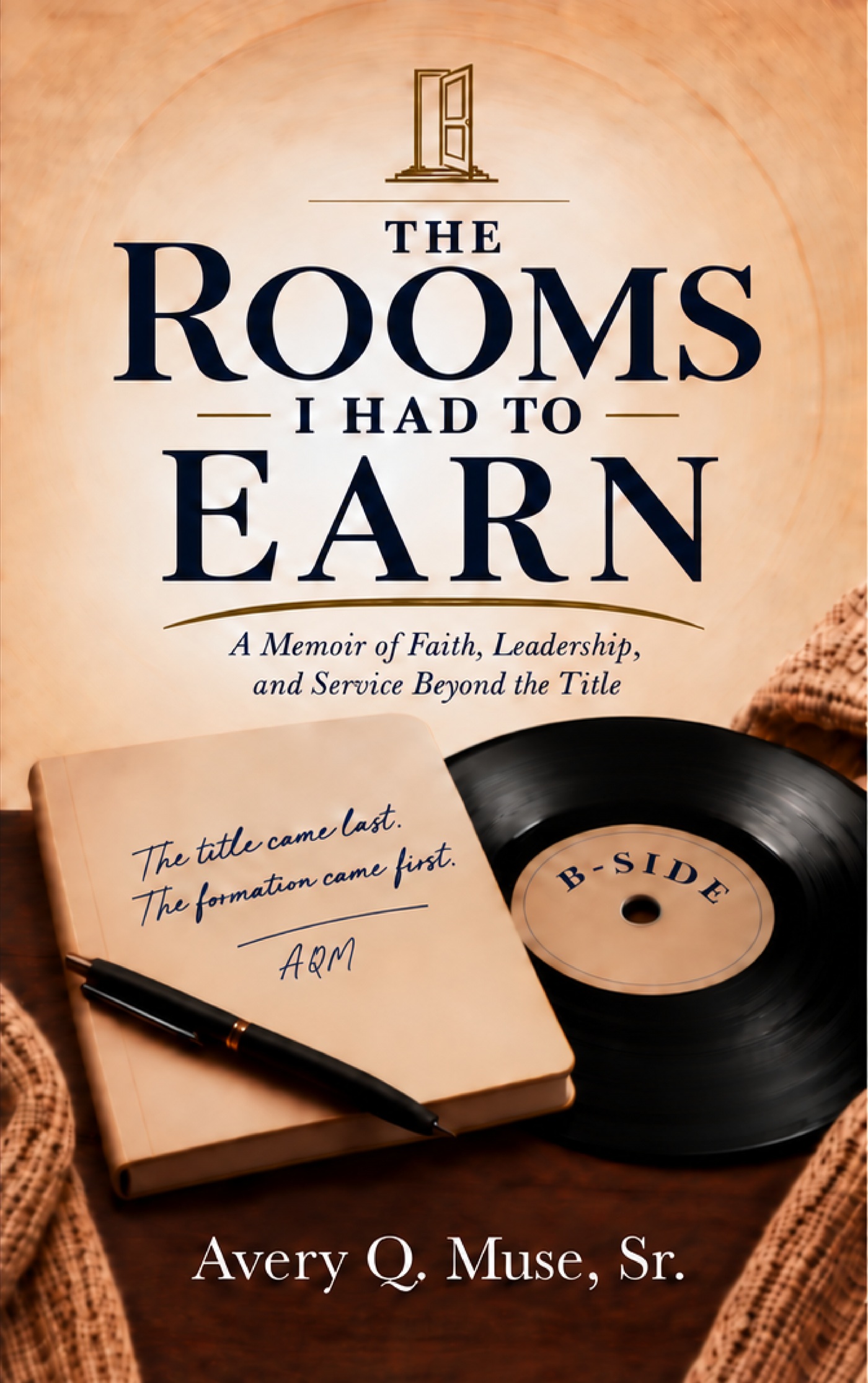
The Rooms I Had to Earn is a faith-rooted leadership memoir about the hidden formation behind visible success.
Avery Q. Muse, Sr. did not begin life on a clear path to executive leadership. Born prematurely in Baltimore to teenage parents, shaped by family, faith, hardship, and the pull of the streets, he struggled in school, failed the fifth grade, and barely graduated from high school. Then he made a decision that would alter the direction of his life: he committed to joining the United States Navy before he knew how to swim, then learned before he shipped out.
What followed was a rare journey of discipline, faith, sacrifice, and service. From Navy communications and the Pentagon to DISA, international assignments, federal law enforcement, the U.S. Capitol Police, the U.S. Department of Health and Human Services, and ultimately the Senior Executive Service, Muse served across some of the nation’s most consequential public missions. His career spanned defense, law enforcement, public safety, the legislative branch, public health, and global technology operations.
But this is not a book about titles.
It is about the B-side of leadership: the private pressure behind public responsibility, the family decisions behind career moves, the grief that still comes to work, the mentors who see capacity before it is fully visible, and the quiet formation that happens long before recognition arrives.
Through stories of leaving the Navy to protect his family, rebuilding after transition, leading through crisis, serving in international mission environments, coaching young men in the gym, supporting high-stakes national operations, and learning that authority must always serve the mission, Muse shows that leadership is not formed only in the rooms people celebrate.
It is formed where faith is tested, humility is required, responsibility is heavy, and service costs something.
At once personal, practical, and deeply reflective, The Rooms I Had to Earn speaks to students, veterans, public servants, executives, parents, emerging leaders, and anyone who has ever wondered whether their beginning disqualified them from their future.
This is a memoir about what happens before the title, beneath the accomplishment, and beyond the position.
The title came last. The formation came first.